Showing posts with label Compost. Show all posts

Friday, 2 March 2018

Why Grow Food?


It’s spring! I know this because every gardening book I have ever read declares that in the northern hemisphere, March is in spring. The view from my window doesn’t scream a surge in growth, nodding daffodils, gambolling lambs, and a surfeit of chocolate eggs (not least because you can never have too many chocolate eggs), but I keep reminding myself that last week, in the heady days of February, I was enjoying an al fresco lunch and failing to suppress the overwhelming urge to sow tomatoes.
Needless to say, the tomatoes have germinated and are leaning towards the office window, turning their backs on me and rebuking me for my lack of patience. They have a point. I knew that it would be better to wait a while before I sowed them, but I refuse to feel guilty, because those little seedlings make my heart sing.
This is why I grow food: my life is so much richer for it. The return on the cost of a packet of seeds is not simply the harvest I enjoy eating, it is also how growing that crop makes me feel. Gardening is known to be good for mental health. I am certainly sunnier when I grow food. Yes, the cabbage whites and rabbits might be thorns in my side, but even with their interference, I am a happier person for tending the crops they are hellbent on devouring.
The thrill of seeing seedlings looping their way into the world never diminishes. It is as magical now as it was when I sprinkled cress seeds on blotting paper as a child. I just wish that everyone could grow something to eat - even just a tiny pot of herbs on a windowsill. 
Every year I expand my veg patch, and this year is no exception. There are more strawberries and raspberries; an extension to the damson hedge; and a new compost area. The compost bins will cost nothing as they will be constructed from old crates. The fruit will hopefully earn its keep before very long. I won’t measure the return in kilos though; I will measure it in the pure joy that comes from picking the first berry, and the glorious realisation that there are sufficient damsons to make a crumble.
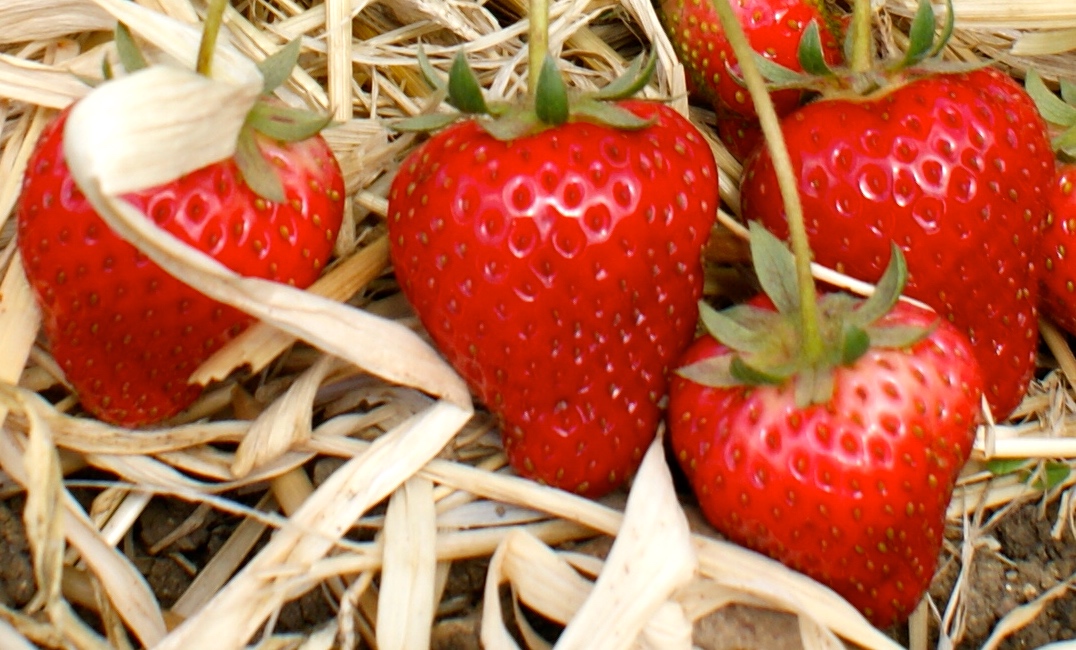
Apart from growing food in the kitchen garden, I also grow crops in little crates and pots by my office door. There are blueberries, strawberries, salad leaves, herbs and pea shoots. They take up very little room, but they make a difference to my day, providing healthy treats to snack on, or salad leaves for lunch.
The pots and the garden are hidden under a thick duvet of snow right now. The great news is that if we are in spring, then summer is on its way. I only hope that my tomato seedlings feel reassured by this news. 

Thursday, 27 August 2015

The Archbishop of Canterbury and the Lambeth Palace Fig

Far be it from me to suggest that gardeners are an inquisitive bunch, but if we were to see a long, high wall which hid a garden from public view, would we turn down an opportunity to visit that garden? I know I wouldn't, especially if those garden gates had been closed to the public for 800 years. EIGHT HUNDRED! It feels as if I have been waiting every second of those 800 years to see this garden!


Lambeth Palace, home of the Archbishop of Canterbury, has the oldest continuously cultivated garden in London. Imagine! If you, like me, spent eternal terms at school colouring in booklets about Tudors, and then immersed yourself in televised Tudor shenanigans in later life, would you be able to contain yourself at the idea of wandering around Archbishop Thomas Cranmer’s patch? The very notion that this garden had already been in cultivation for 300 years in Henry VIII's time was almost enough to sidetrack me from the plants!


Of course, the garden is not as it was when Cranmer annulled Henry VIII’s marriage to Catherine of Aragon and married Henry to Anne Boleyn. Major changes took place after 1783, when John Moore became Archbishop. Walkways, tree belts and contouring made at his instigation can still be seen today. A fig tree, which was over 200 years old at the time, survived the changes. Ficus carica 'White Marseilles', was planted by Reginal Pole, the last Roman Catholic Archbishop of Canterbury, in 1556 (the year Cranmer was executed and just nine years after Henry VIII's death).


Archbishop Pole had been in exile for part of Henry VIII's reign, and it is thought that he brought the fig cutting to Lambeth Palace from Southern Italy. Last year, the Archbishop of Canterbury, Justin Welby, gave Pope Francis a cutting from the fig tree. 


Nowadays the garden is maintained according to organic principles where possible. For the compostholics among us (which I hope is everybody), here is a photo of the engine room of the garden. Apart from the aforementioned wall, you can just about see the edge of the compost bays with their more advanced contents opposite these bins. I wouldn't normally excite us all with compost pictures, but then again, inspecting composting areas at palaces isn't an everyday occurrence for me.


At around ten acres, it is the second largest private garden in London (the garden at Buckingham Palace being bigger). It is located across the river from Parliament and right under the nose of St Thomas’ Hospital, so it is a busy place, yet it is surprisingly peaceful. Bee hives, flowers, lawns, trees, a swing, topiary, and a heron fishing in the pond. If it wasn't for the tops of double-decker buses and the Palace of Westminster peeping over the wall, we might be forgiven for thinking that we were in the countryside. 


This private garden is used by the Archbishop, his family and staff. Despite its size, the layout makes it feel comfortable. It is one of those rare gardens that has a dimension which goes beyond design. It is not just all the layers of history; it is a special place to be. 


The garden is only open to the public on two more occasions this year: the first Wednesdays in September and in October. If you happen to be in London on one of those Wednesday afternoons, I recommend that you grab the opportunity to visit; entry is just £4. It is next door to the Garden Museum, so it is very easy to combine a visit to the two. 


Saturday, 2 March 2013

The Alhambra, Generalife and a Thermo Compost Bin

It is late 1990 in a nightclub in London. She takes one look at the stranger at the bar and is absolutely certain that he is the man she will marry. He smiles and asks her to tell him a joke. Without a second thought she launches into a tale of dubious cleanliness involving a famous snooker player of the time. 

The moral of this story? Learn one joke very well as you never know where it will lead you. For us, it led to the Alhambra in Spain, where we celebrated twenty years of marriage (yes, she was right about the stranger at the bar).

Chaenomeles speciosa and citrus fruits
at the Generalife
Call me a quitter, but no words or photos I can publish here will ever do justice to the Alhambra and Generalife. Information about this fascinating UNESCO World Heritage Site abounds, so instead I thought I would show you something rather clever I saw there which we might be able to adapt to our own gardens. Imagine you are taking this photo (yes I know it’s not as good as one you would take, but in my defence, it was a dull day and I was in a heightened state of emotion). You are at the Alhambra and looking across to the Generalife (you can just spot the clipped hedges of the Lower Generalife Gardens towards the centre of the photo). There is quite a distance between where you are standing and those hedges.  


Now imagine you are standing just above the clipped hedges of the Lower Generalife Gardens which we saw in the previous photo and you are looking back across the valley towards the Alhambra. Look at the way those hedges are used architecturally and how they mimic and support the view beyond. 


The hedge hugging the tower in the next photo is on your side of the valley, not on the side where the tower stands. The distance between the Alhambra and the Generalife appears reduced and the buildings and the hedges on either side of the valley blend beautifully. Now the question is, how am I going to apply this to my garden? In truth, it could be quite a challenge as Norfolk isn't famed for its hills and there is a woeful lack of towers and palaces on our little farm, but it has to be worth playing with a few ideas.


Our wedding anniversary shares a date with the first anniversary of the start of our barn conversion and to mark the occasion I decided to indulge in a minor construction project of my own: a new compost bin. Historically, I have been a bit of a traditionalist on the compost front - all New Zealand bins with a brief, ill-judged foray into tumblers, but I have decided to let my hair down this year and branch out into the world of thermo bins. I am now watching the speed of decomposition with great interest - if this had been my opening line in the nightclub, we certainly wouldn't be celebrating twenty years of marriage, although one of us might have celebrated winning a prize for the hastiest exit from a nightclub in 1990... and where would that have left me? Probably staring at an abandoned drink on the bar and toying with the idea of taking it home for use in slug traps. 

Happy first anniversary to our barn conversion

Information about the Alhambra and the Generalife can be found at www.alhambradegranada.org  We booked our tickets early by following a link from this website. It was worth doing - even though it was February, I saw people missing out on a visit because they were too late to purchase tickets. 

Wednesday, 4 July 2012


Skinny Beans and Falling in Love 

Isn’t it great when you look forward to something and it turns out to be even better than you had anticipated?


I had wanted to see Felbrigg Hall's walled garden for some time, but since I am a seasoned procrastinator I only got round to it a few days ago. Thankfully there are no photos of me stepping into the garden, although I am certain I wasn't the only visitor who stopped dead in their tracks and stood open-mouthed with eyes like organ stops.  

The use of wall-trained plants was superb. Uncompromising mass planting resulted in a whopping wall wow-factor. I have never been the number one fan of climbing Hydrangea (Hydrangea anomala subsp. petiolaris). It is a solid, dependable plant and I rely on it to do a job, which it does very well, but it has never set my heart aflutter, until Felbrigg. 

Here is what the wall looked like from the other side. These are not the best photos in the world. No camera shake facility is any match for a flabbergasted gardener.


They were not in full flower when I saw them. Imagine what they will be like this week! The same full-on effect was achieved with figs in the allotment area. 


The plants seemed more exuberant than any others I have seen this summer. Clearly the walls help to protect them, but we mustn't overlook the addition of a jaw-dropping 75 tons of mulch which has been applied every winter since 1999. They use their own garden compost on the main borders and mushroom compost in the vegetable gardens. Oh how I love a good mulch.


The allotments there are delightful. Trug-loads of delicious fruit and vegetables are interspersed with flowers which are grown thickly in serried ranks of great gorgeous herbaceous hedges


Areas are set aside for families to grow their own food. Fruit and vegetables grown in the garden supply the restaurant and when fruit is ripe in the orchard, visitors are invited to take one piece to enjoy. Bees are encouraged and no pesticides are used on the vegetables, fruit, or borders in the walled garden.  
Bantams control insect pests in the allotments and rescue guinea fowl free range in the orchard. It is this generous, inclusive approach which makes the garden all the more special.


For me, the most relaxing area was the orchard. Mown paths meandering through longer grass and a thoughtfully placed bench is an unbeatable combination, especially when you are still recovering from Hydrangea heaven.


Having feasted my eyes on all these uberplants**, my thoughts turned to my climbing French beans which are not their usual feisty selves this year. Their stems are skinnier and the leaves are set further apart than usual. The same thing has happened with a number of my friends’ runner and French beans. I have taken the precaution of a later sowing, just in case cropping is reduced. Of course, now I have done this, we will be in for a great bean glut later this summer. It’s a good job that we love beans as much as we love mulch (although, much as we love it, we don’t eat the latter).

* Felbrigg Hall, Norfolk. www.nationaltrust.org.uk/felbrigg-hall

** I'm sorry, I don't know where my laptop keeps its umlauts.