Showing posts with label Tomato. Show all posts

Friday, 2 March 2018

Why Grow Food?


It’s spring! I know this because every gardening book I have ever read declares that in the northern hemisphere, March is in spring. The view from my window doesn’t scream a surge in growth, nodding daffodils, gambolling lambs, and a surfeit of chocolate eggs (not least because you can never have too many chocolate eggs), but I keep reminding myself that last week, in the heady days of February, I was enjoying an al fresco lunch and failing to suppress the overwhelming urge to sow tomatoes.
Needless to say, the tomatoes have germinated and are leaning towards the office window, turning their backs on me and rebuking me for my lack of patience. They have a point. I knew that it would be better to wait a while before I sowed them, but I refuse to feel guilty, because those little seedlings make my heart sing.
This is why I grow food: my life is so much richer for it. The return on the cost of a packet of seeds is not simply the harvest I enjoy eating, it is also how growing that crop makes me feel. Gardening is known to be good for mental health. I am certainly sunnier when I grow food. Yes, the cabbage whites and rabbits might be thorns in my side, but even with their interference, I am a happier person for tending the crops they are hellbent on devouring.
The thrill of seeing seedlings looping their way into the world never diminishes. It is as magical now as it was when I sprinkled cress seeds on blotting paper as a child. I just wish that everyone could grow something to eat - even just a tiny pot of herbs on a windowsill. 
Every year I expand my veg patch, and this year is no exception. There are more strawberries and raspberries; an extension to the damson hedge; and a new compost area. The compost bins will cost nothing as they will be constructed from old crates. The fruit will hopefully earn its keep before very long. I won’t measure the return in kilos though; I will measure it in the pure joy that comes from picking the first berry, and the glorious realisation that there are sufficient damsons to make a crumble.
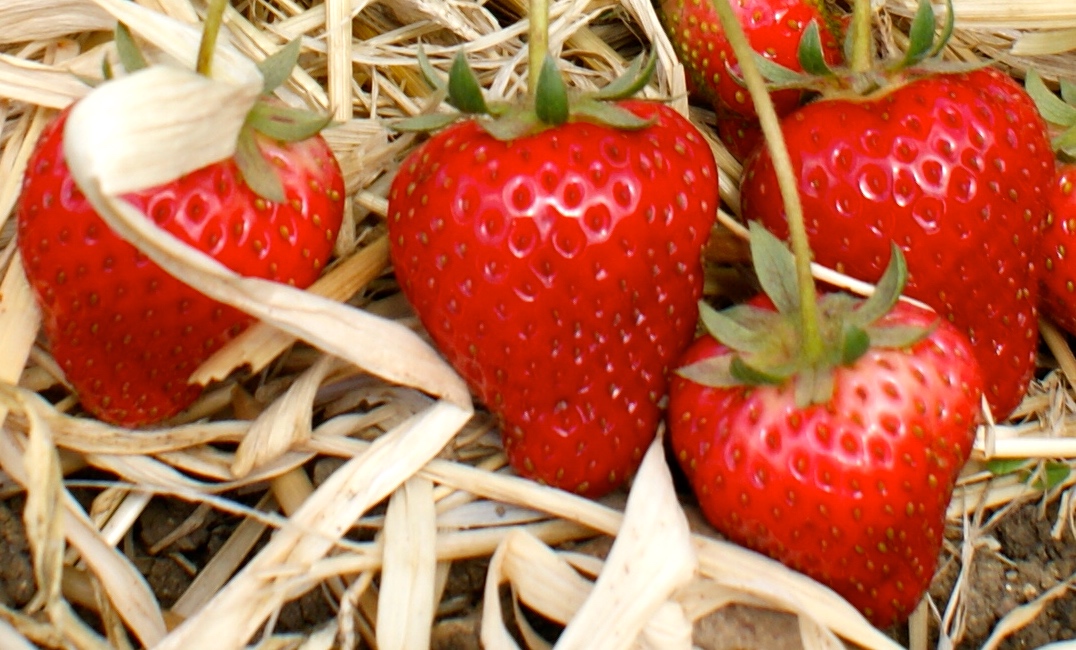
Apart from growing food in the kitchen garden, I also grow crops in little crates and pots by my office door. There are blueberries, strawberries, salad leaves, herbs and pea shoots. They take up very little room, but they make a difference to my day, providing healthy treats to snack on, or salad leaves for lunch.
The pots and the garden are hidden under a thick duvet of snow right now. The great news is that if we are in spring, then summer is on its way. I only hope that my tomato seedlings feel reassured by this news. 

Friday, 27 January 2017

The Life of a Kitchen Gardener

I was introduced to the wonderful world of nurturing, picking and eating homegrown produce when I was a child. I don't remember giving a second thought to growing food during my late teens; then I got my first home with a garden. It will come as no surprise to veggie growers to learn that I swiftly replaced the overgrown low maintenance planting with higher maintenance, but hugely rewarding edibles. An allotment soon followed. It was a neglected plot. Bringing it back into full production was extremely hard work, but every particle of soil reclaimed from the tenacious grip of couch grass meant more space for growing glorious food.
Over the years my love for growing and eating homegrown produce has not diminished, but the assortment of crops I grow has changed. When I became a parent to three children under three years old, I stopped growing anything requiring too much attention in the kitchen. Podding peas became a thing of the past, while strawberries, raspberries, tomatoes, cucumbers, okra and peppers were grown in great numbers. I also embraced potatoes in pots, not because I was short of space, but because rooting around for spuds in a container is far quicker (and safer) than finding a fork and digging up potatoes with three hungry children trailing in your wake. The potatoes also came out cleaner than they did when lifted from the soil, which sped up the whole process of food preparation considerably.
As our children grew older I added their favourite foods to the mix. Shiny aubergines, asparagus, purple beans and sweetcorn were welcomed into the greenhouse and onto the plot. Our strawberry patch expanded and raspberries were given a free rein to walk wherever they pleased, so long as they fruited. At harvest time the children would run excitedly to the kitchen garden with their friends and delight in picking great bowlfuls of juicy tomatoes and succulent strawberries warm from the sun. Harvesting crops was a novelty for some of their friends. I hope that they will remember those sunny days of childhood and try growing food for themselves one day.
Now our children are teenagers with busy lives. For most of the year they barely have the time to notice that their food may have travelled only a matter of metres from the patch to their plate, but then in summer, when school’s out, I see them helping themselves to fruit from the kitchen garden or picking a salad for lunch.
For the past two years one of our children has grown chillies on her bedroom windowsill. She also has an ever-extending collection of cacti. May this be the start of a lifelong love of gardening for her. Our youngest teen likes to see flowers in the house. I am hoping that our new cutting garden will inspire her. As for me, I will be found in the vegetable garden, trying out new crops and looking forward to that point in summer when the school closes its doors and our children remember where their food comes from. 

Wednesday, 6 July 2016

Perennial Basil

Hilarius, the French physician, claimed that sniffing basil had led to a scorpion breeding in the brain of an acquaintance. I don't know about you, but I have buried my nose into the King of Herbs on many occasions and have never, as yet, noticed scorpions in my brain, breeding, or otherwise. 
My passion for growing basil began in London where an Italian neighbour's garden was the source of a bountiful supply of fresh, juicy, sun-ripened tomatoes and delicious basil. He gave me my first basil plant and I quickly became hooked on growing culinary herbs. The thrill of harvesting fresh herbs never diminishes. I keep the plants close to the kitchen door so that I can grab a handful without bothering to put on my shoes. I also grow lettuce and tomatoes there in the hope that I might reach for salad instead of a chocolate bar (there is more chance of basil inducing brain-breeding scorpions). 
The Salad Bar (sadly, the chocolate bar is no longer with us)
Greeks and Romans would curse when they sowed basil seeds as they believed that it helped germination. When seeds stick to my hands rather than depositing themselves onto the compost, I call them names. It is hardly in the same league as a jolly good curse, so I have to take other precautions, such as sowing into modules, which does much to prevent death from damping off. I supplement home-sown insulted seeds with plant purchases if I see one which tickles my fancy. There are so many to choose from: cinnamon, lemon, lime, sweet or spice, Thai, Greek, Marseillais and Neopolitana, not forgetting the sumptuous purples, which may or may not be ruffled.
Spot the purple basil purchase
The key requirements of basil are warmth and well-drained, rich soil. I grow the plants in containers placed in sheltered corners which receive midday sun. Basil can be given to sulking if it goes to bed with wet feet, which is perfectly understandable (I don't like my feet to be cold, let alone wet), so water basil by noon.

One of my ongoing gardening challenges is to keep the kitchen supplied with fresh herbs over winter. Some, such as rosemary, are a doddle, but others, basil among them, are trickier, especially without a greenhouse. The solution might be 'African Blue' basil (Ocimum 'African Blue'), a half hardy perennial which is sterile. Since it doesn’t go to seed, I guess that it will not have that irritating habit of ceasing leaf production every time it sends up a flower stem, which is as well because the flowers are beautiful and delicious (I nibbled a few after I took the photos). 
Ocimum 'African Blue'
While 'African Blue' certainly tastes of basil, it does not have quite the same flavour as the more commonly grown annuals. It does, however, have the distinct advantage of being perennial, so it may very well supply me with leaves earlier than the annual forms if I get it into my sunny office before the first frosts. Imagine how much basil I will be sniffing at my desk! If the perennial basil experiment works and Hilarius was right, we may very well be facing a massive UK scorpion infestation in 2017. It will make a change from slugs.

Wednesday, 8 June 2016

The Hopeful Kitchen Gardener

Panicking about unplanted pumpkins and runner beans with nowhere to run is an annual event in my kitchen garden. Spring-sown plants scream to be released from their pots and I can almost hear the sighs of relief every time I pop one of these poor, desperate specimens into the soil. Although everything needs to be done yesterday and the weeds will be back tomorrow, I am always filled with hope at this time of year because (with the exception of a breakout of peach leaf curl and the ongoing battle with aphids) things have yet to go catastrophically wrong in the kitchen garden.
The prettiest stage of a medlar

There were so many pollinators about in spring that I decided not to flutter around the fruit trees with my pollinating paintbrush pretending to be a bee. Unsurprisingly, the pollinators have done a fine job. Tiny embryonic fruits cluster on the branches of trees. They have yet to suffer the rigours of June drop, wasps and scab, so for the next week or two I shall remain optimistic that this autumn will be fuelled by wall-to-wall pies and crumbles.
Hope of fruit crumble, custard and cream

The hens are clearly heeding the slug and snail warning this year as their pest patrols have been ruthless. Nothing gets in their way. Last week they uprooted part of a mirabelle hedge, three asparagus plants and picked every last one of the developing gooseberries. That's one crumble I won't be enjoying this summer.
Hope of summer pudding

Images of pumpkin plants being released from the prison of their pots and spreading their roots gratefully (if indeed pumpkins feel gratitude) into delicious soil only to be dragged from their moorings by an over-exuberant hen, have led me to protect all of my crops from the chickens and rethink the whole slug control issue. 
Ever hopeful Hyacinth Hen

Fortunately my family are squirrels. That is not to say that they spend their days clinging valiantly to bird feeders and chewing on the little plastic perches, but they could quite happily live off seeds and nuts - particularly pistachios. This is great news in light of the slug and snail invasion forecast. I buy unsalted pistachios and it makes my family happy. I take the shells, scatter them around the brassicas and the slugs and snails do a runner elsewhere (hopefully into the path of a peckish hen). It takes a lot of pistachios to mulch a broccoli bed, then again, if it were left to the chickens, the broccoli would be long gone. 
Hope of pumpkin pie

While tomatoes and potatoes have yet to be blighted and courgette leaves exhibit no sign of mildew, we can remain optimistic for a bumper harvest. Early summer is a time for hope: hope that we won't be pulling pointless micro-celeriac again (what on earth happened to the celeriac last year?); hope that 2016 will be the year of the great butternut glut; and on a personal note, hope that my family's passion for pistachios will never wane.

Wednesday, 4 May 2016

The Garden Nursery

When I was six years old, I loved to tiptoe quietly into the garage to peek at the silhouettes of baby blue tits in the bird box my dad had built into our garage wall. The back of the box was glazed and covered with brown paper which gave the birds a sense of privacy while allowing us the opportunity to see something of their lives. My dad died the following spring, but the seeds of my fascination with the natural world were already sown.

Nowadays we don’t need to head into the garage to see silhouettes of chicks in a nest. For Christmas I received a bird box with a camera in it. I suspect that the gift is part of a cunning plan to encourage domesticity as the nesting box is sited directly opposite the kitchen window under which there is a sink. Since the sink is required to fill the kettle, the domesticity plan has backfired to the point that far from motivating me to attempt kitchen chores, there has been a significant increase in the quantity of time I spend sitting down. I have always drunk coffee on the hoof, but if there is any activity around the bird box while I am filling the kettle, I fire the remote at the television, plonk myself into a chair and ogle the nest while enjoying a lovely warm drink and wondering what Dad would have thought of this wireless camera bird box. 
The nest taking shape
The most astonishing accomplishment of this piece of technology is that it has caught the attention of my own offspring. Instead of the usual fare they enjoy on television, they have been spotted watching nature. Out of choice! Surely this is a healthy form of screen time?
Feathering the nest
From the comfort of the kitchen we have also been watching over a mother who hatched 11 ducklings. The nest is in the lavender which I have yet to cut back after flowering last year. I don’t cut back plants until spring because of the shelter they offer to minibeasts. I hadn't considered that the same plants might offer shelter to much larger creatures. Of course, my lavender tends to fall apart more quickly than it would had I shorn it after flowering, but it is easy to strike cuttings so I always have a ready supply. The courtyard where the ducklings hatched is a former boar pen. In the two years since it was converted into a garden, 22 ducklings have made their way into the world under the cover of the plants.
The garden feels like a dating disco. Our feathered friends are busily pairing off and doing the bird equivalent of The Birdie Song while dancing around their handbags, or in the case of Mr & Mrs Pheasant, tiptoeing through the tulips, (aptly named Tulipa 'Night Club'). At this rate - and with any luck - we will be inundated with offspring!
Mrs P doesn't look impressed. 
Perhaps she doesn't like the tulips.
There is a baby boom in my office too. Since I don't have a greenhouse, the office floor must double up as a nursery. Butternuts, tomatoes, peppers and Cosmos are jostling for light and waiting impatiently to fledge. It is hardly the ideal start for a plant, but they are safer indoors than in the cold frames where they would become frazzled with frost in no time. I rather like sharing my office with them; I only wish that the greenfly hadn't followed them in. The office greenfly are clearly very happy with the food and shelter on offer as they are procreating like it is going out of fashion. One solution will be to bring in the ladybirds. This is all putting a most unlikely slant on the notion of a busy day at the office. 

I am joining with Wildlife Wednesday at https://mygardenersays.com/ Why not pop over there, grab a drink and spend some time marvelling at the wildlife in gardens around the globe?


Thursday, 21 August 2014

Trial, Corruption and A Few Good Plants

Gardeners are an optimistic bunch. If a crop or plant doesn't succeed in one growing season, we reason that we can always try again next year. Eventually, after another year (or years if stubbornness and tenacity are combined with our natural gardeners' optimism), we might decide to move on and when we do there is usually something new, more vigorous, sweeter, higher yielding, more floriferous, taller or more compact to try, all thanks to the huge amount of work involved in breeding, selecting and trialling plants.  


I had the immense pleasure of touring the Thompson and Morgan trial site last week. The remnants of Hurricane Bertha had swept across this secret location the day before and threw hail and thunder at us while we were there, yet the Delphinium looked splendid. These glorious Delphinium are from Terry Dowdeswell in New Zealand and they are strong growing, blackspot resistant and have well-spaced flowers. 


The site is home to an extensive collection of plants being trialled in containers. These include shrubs such as Buddleja 'Buzz'™ and Hydrangea paniculata ‘Sundae Fraise’ which look great in pots. Needless to say, this is a popular spot with butterflies.


I love Limonium vulgare. We see it growing in the dunes on the beaches in Norfolk and I grow it in the farmhouse borders. The problem for me is that it is so insignificant in the garden setting that it is easy to overlook. Limonium ‘Blue Velvet’ has none of these shrinking violet tendencies. It is beefy without looking as if it is pumped up with steroids and although it is a good house plant, it looks wonderful outdoors. I sincerely hope it makes it through the trials as it has been catapulted to the top of my wish list. 


The container plants at the trial site are given a liquid feed every other day. At the other extreme, those growing in the field are watered when they are planted and then left very much to their own devices. The field, with its rows of crops and flowers battling with the elements is more akin to the growing conditions in my garden, so naturally I was keen to discover how the plants there fared. The truth is that not all of them are happy, which is just as it should be, otherwise how would we gauge any improvements?


I am particularly partial to pea tips, so I would normally look upon a pea trial as a potential grazing opportunity, but since most of the peas were mildew-ridden, I was saved the embarrassment of being caught eating the trial. I wouldn't have minded some of ‘Terrain’ though, it stood out like a beacon of health in a swamp of mildew. The contrast between the plants was astonishing. 


Strangely enough, an ornamental carrot really got me drooling. The frothy burgundy flowers of Daucus carota ‘Dara’ added that intriguing combination of darkness of colour and lightness in form to the border.  Although it is ornamental it produces a white edible root, but since it is a carrot, the flowers ought to be attractive to pollinators so despite my unseemly drooling, I won't be pulling up the roots for lunch.


A plant which is definitely great for pollinators is Ageratum. I have spent the past few years feeling guilty that I don’t grow it as I sow only larger annuals. Ageratum houstonianum ‘Timeless Mixed’ which is new for 2015, is a taller version which means that I will be re-introducing Ageratum to my garden next year. It also makes a good cut flower, which will doubtless continue the Ageratum cycle of guilt when I steal stems from the pollinators to pop in a vase. 


On a happier note, Cosmos bipinnatus ‘Cupcakes’ is simply beautiful. Even a cake-shy coeliac like me will want to see these cupcakes in the garden in 2016. It is just a pity we will have to wait for so long. 


In the meantime, there are always tomatoes. In a blind taste test of five varieties, ‘sweet aperitif’ came out tops for me. It will certainly be making an appearance on my seed wish list for 2015.


During the evening after the tour, it became apparent that my camera and computer were no longer happy to communicate with one another. My camera card was corrupt and my lap top was having none of it, so I was left pictureless. My thanks go to Thompson and Morgan for supplying the wonderful photos in this post. Thank you too to Michael Perry, Kris Collins and Hannah Ashwell for a fascinating tour coupled with timely cups of tea and the sweetest of pink blueberries to nibble on. 

If you want to know more about Thompson and Morgan, they are at:
http://www.thompson-morgan.com/

If you want to read more about the day:

http://www.blackberrygarden.co.uk/2014/08/a-visit-to-thompson-and-morgan-trial.html
http://blog.plantpassion.co.uk/2014/08/great-new-cut-flower-varieties-at-the-thompson-and-morgan-trials-field.html
http://gardenerinnit.wordpress.com/2014/08/18/my-first-attempt-at-this-blogging-malarkey/
http://hoehoegrow.blogspot.co.uk/
http://vegplotting.blogspot.co.uk/


Friday, 21 September 2012

Dancing While The Weeds Take Over

Asking a gardener to convalesce is like putting a Border Collie on bed rest. Nothing can reduce the desire to be outside; not even a stack of thoughtfully selected books - for the gardener not the Border Collie, a breed famed for its intellect but not for devouring meaty novels, unless "the dog ate my homework" counts.


Of course, gardeners listen to the pleas of our loved ones to rest, we really do; it's just that the second their backs are turned, we break free from our garden beds in the shade and gently potter (or putter, depending on where we live). In my case, having spent some time in hospital, I was released into the wilds of our garden for a spot of outdoor convalescence and while gently potter-puttering, I quietly planted a hedgerow. My loved ones were shocked and concerned and who can blame them? Summer is hardly the hedge-planting season, but as I tried to explain as they frogmarched me back to the comfort of my garden bed, it was perfect planting weather and in any case, I had been nurturing these native plants in containers since the bare-root season and saving them for this precise moment (the completion of the rabbit fencing - not the enforced convalescence).


This fabulous Stipa gigantea really lifted my spirits in hospital. The gardens at the hospital are actually a landscaped car park - a practical and necessary part of hospital life, yet the most blissful place for staff, patients and visitors to enjoy. They underline the importance of beautiful, practical public spaces. The same can be said of our wonderful Olympic Park (below).


I loved the Olympic Park. My friends and I deemed it to be the happiest place on the planet. I wanted to spend as much time there as I could and I was thrilled to be involved in the Olympic Closing Ceremony. After months of rehearsals, my lovely new friends and I donned our yellow outfits and had the time of our lives dancing, or in my case, hoping that I was doing what everyone else was doing and preferably at the same time as them. Here are some of us shortly before the ceremony. Our ages range from teenage to 80 years old.  


All this excitement means that I have barely been home this summer and if I have been in Norfolk, I have spent too much time watching the swallows swoop across the sky above the piggeries and not enough time gardening. However, I did enjoy a bowl of strawberries within 60 days of planting them (as promised in the 20th June post) and I am absolutely converted to 'Darlisette' which has the most perfect level of sweetness I have ever tasted in a strawberry. You will note that I failed to get round to laying down a straw mulch, along with a million and one other jobs this summer. 


I feel guilt-ridden, but I will confess that despite all the rain and the misery of blight affecting so many, my first experience of growing tomatoes without a greenhouse has been surprisingly successful... 


.. and much as I don't like to boast, a summer of neglect has led to spectacular weeds in the flower borders.


 Aren't they beautiful?


* Please note that the photo of the yellow-clad people was not taken by me and belongs to a member of TP7. The first picture is proof (were in needed) that flowers in wildlife seed mixes attract wildlife.