Showing posts with label Raspberry. Show all posts

Friday, 2 March 2018

Why Grow Food?


It’s spring! I know this because every gardening book I have ever read declares that in the northern hemisphere, March is in spring. The view from my window doesn’t scream a surge in growth, nodding daffodils, gambolling lambs, and a surfeit of chocolate eggs (not least because you can never have too many chocolate eggs), but I keep reminding myself that last week, in the heady days of February, I was enjoying an al fresco lunch and failing to suppress the overwhelming urge to sow tomatoes.
Needless to say, the tomatoes have germinated and are leaning towards the office window, turning their backs on me and rebuking me for my lack of patience. They have a point. I knew that it would be better to wait a while before I sowed them, but I refuse to feel guilty, because those little seedlings make my heart sing.
This is why I grow food: my life is so much richer for it. The return on the cost of a packet of seeds is not simply the harvest I enjoy eating, it is also how growing that crop makes me feel. Gardening is known to be good for mental health. I am certainly sunnier when I grow food. Yes, the cabbage whites and rabbits might be thorns in my side, but even with their interference, I am a happier person for tending the crops they are hellbent on devouring.
The thrill of seeing seedlings looping their way into the world never diminishes. It is as magical now as it was when I sprinkled cress seeds on blotting paper as a child. I just wish that everyone could grow something to eat - even just a tiny pot of herbs on a windowsill. 
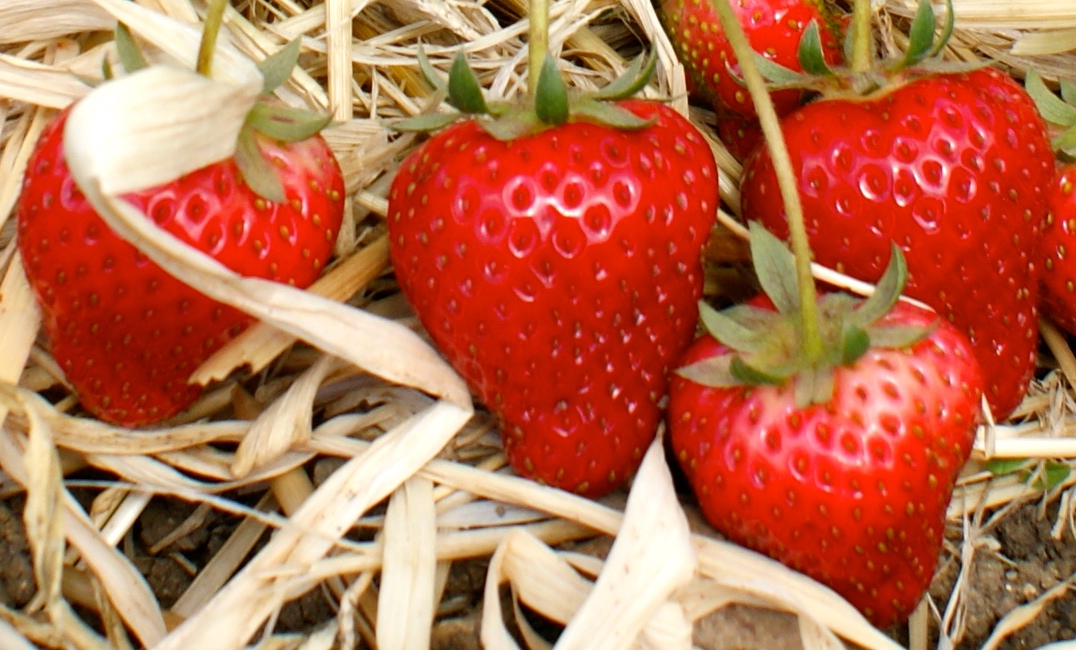
Every year I expand my veg patch, and this year is no exception. There are more strawberries and raspberries; an extension to the damson hedge; and a new compost area. The compost bins will cost nothing as they will be constructed from old crates. The fruit will hopefully earn its keep before very long. I won’t measure the return in kilos though; I will measure it in the pure joy that comes from picking the first berry, and the glorious realisation that there are sufficient damsons to make a crumble.
Apart from growing food in the kitchen garden, I also grow crops in little crates and pots by my office door. There are blueberries, strawberries, salad leaves, herbs and pea shoots. They take up very little room, but they make a difference to my day, providing healthy treats to snack on, or salad leaves for lunch.
The pots and the garden are hidden under a thick duvet of snow right now. The great news is that if we are in spring, then summer is on its way. I only hope that my tomato seedlings feel reassured by this news. 

Friday, 27 January 2017

The Life of a Kitchen Gardener

I was introduced to the wonderful world of nurturing, picking and eating homegrown produce when I was a child. I don't remember giving a second thought to growing food during my late teens; then I got my first home with a garden. It will come as no surprise to veggie growers to learn that I swiftly replaced the overgrown low maintenance planting with higher maintenance, but hugely rewarding edibles. An allotment soon followed. It was a neglected plot. Bringing it back into full production was extremely hard work, but every particle of soil reclaimed from the tenacious grip of couch grass meant more space for growing glorious food.
Over the years my love for growing and eating homegrown produce has not diminished, but the assortment of crops I grow has changed. When I became a parent to three children under three years old, I stopped growing anything requiring too much attention in the kitchen. Podding peas became a thing of the past, while strawberries, raspberries, tomatoes, cucumbers, okra and peppers were grown in great numbers. I also embraced potatoes in pots, not because I was short of space, but because rooting around for spuds in a container is far quicker (and safer) than finding a fork and digging up potatoes with three hungry children trailing in your wake. The potatoes also came out cleaner than they did when lifted from the soil, which sped up the whole process of food preparation considerably.
As our children grew older I added their favourite foods to the mix. Shiny aubergines, asparagus, purple beans and sweetcorn were welcomed into the greenhouse and onto the plot. Our strawberry patch expanded and raspberries were given a free rein to walk wherever they pleased, so long as they fruited. At harvest time the children would run excitedly to the kitchen garden with their friends and delight in picking great bowlfuls of juicy tomatoes and succulent strawberries warm from the sun. Harvesting crops was a novelty for some of their friends. I hope that they will remember those sunny days of childhood and try growing food for themselves one day.
Now our children are teenagers with busy lives. For most of the year they barely have the time to notice that their food may have travelled only a matter of metres from the patch to their plate, but then in summer, when school’s out, I see them helping themselves to fruit from the kitchen garden or picking a salad for lunch.
For the past two years one of our children has grown chillies on her bedroom windowsill. She also has an ever-extending collection of cacti. May this be the start of a lifelong love of gardening for her. Our youngest teen likes to see flowers in the house. I am hoping that our new cutting garden will inspire her. As for me, I will be found in the vegetable garden, trying out new crops and looking forward to that point in summer when the school closes its doors and our children remember where their food comes from. 

Friday, 4 September 2015

The Trouble With Japanese Wineberries

A friend was recently bemoaning his lack of wineberries. I understood his disappointment. While my Japanese wineberry has always produced snackable quantities of fruit to sustain me as I ramble around the kitchen garden, berries have never made it into the kitchen where they might be arranged in a dish and adorned with double cream, or even cooked into some glorious wineberry pudding.


The solution to this dilemma came during my summer holiday to Croatia. My absence from our plot gave the Japanese wineberry an opportunity to build up a decent quantity of fruit for me to harvest. Clearly this is a problem with wineberries: it is impossible to walk past the plant without grazing on the ripe fruits. I look forward to hearing if my friend was met by a wineberry glut when he returned from his summer holiday. If so, I hope that he, like me, celebrated by adding some to his Sunday pud. Below is a pudding I thought I would never eat: apple and wineberry crumble, made possible by my absence from the garden.  


On a more serious note (as if the creation of my Sunday pud isn't serious enough), Japanese wineberries have placed me painfully on the horns of a dilemma. On the one hand, I am all for a plant which looks good in winter and offers protection to wildlife and food to me; on the other hand, Japanese wineberry is invasive in some areas of the world. 


Actually, I am perched on the horns of two wineberry-related dilemmas (this is truly an uncomfortable post). Invasiveness is one; the other is that while I garden for wildlife, I don't like my food being nibbled by anyone other than me. Joey not sharing food in Friends* springs to mind (which is unsurprising as my kids watched 236 episodes this summer... well, it did rain... a lot). If birds eat the fruit in the kitchen garden, I get upset. The developing fruit on a Japanese wineberry is protected by a hairy calyx, which makes eating the fruit trickier for birds, which means more berries for me. The birds here have plenty to eat: there are the plants I grow for them, plus the seed in the feeders, the chicken food when the chickens aren't looking, not forgetting the hedgerows, the windfalls in the orchard and some carefully selected weeds. The birds will not go hungry, but I do feel a bit mean about not wanting to share my food with them. 

Finches feeding on a thistle
(so why do I still feel bad about not sharing my wineberries?)
The good news for gardeners in our rainy isles is that I have found no reference anywhere to Japanese wineberry (Rubus phoenicolasius) being invasive in the UK. At around 2 metres, it is not a small plant, but it can be trained artfully against a wall or fence, or left free-standing with its stems arching hither and thither. Either way, it rewards us with year round interest: pretty white-pink starry flowers in early summer are followed by glistening burgundy berries in August. The leaves are bright green with white undersides and the orange-red bristly stems seem to glow in the low winter sunlight.


In my humble opinion, wineberries taste pretty similar to raspberries, but with a bit more zing. They are easier to maintain than raspberries (my wineberry hasn't walked anywhere, whereas the raspberries are taking great strides across the kitchen garden). Like summer fruiting raspberries, wineberries fruit on one-year-old stems, so cut the old brown stems down to the base and leave the young pink-orange ones for next season. If you are thinking of planting one, now is a good time. Designwise, try to site it where the stems will catch the winter sun, but where it won't dry out. Of course, like most fruits, it has its pests. The most formidable being the grazing gardener. The remedy is a gardener's holiday; about a week should do it. 

* Joey's stance on sharing food... https://www.youtube.com/watch?v=DdCfZYgTjqY