
Wednesday, 23 October 2013

Sunday, 13 October 2013
Kitchen Garden Multitaskers
What is your horticultural multitasking superhero? For me, it is the runner bean. It may not be the most fashionable or glamorous of plants, but it has an attractive twining stem; delicious pods; it makes a valuable contribution to structure in the border while taking up little space; it fixes nitrogen in the soil; and the flowers are hugely popular with bees. Could any plant ever match the multitasking capabilities of the mighty bean? Surprisingly, there are a few good-looking contenders in our kitchen garden this year.
I had been warned that I might struggle to spot the difference between asparagus peas and pencil sharpenings,* so any peas with sharp wings go straight into the compost bin and we eat only young pods. They are so delicious that they cause ructions at the table and I have been compelled to count pea pods onto plates. This painstaking act has triggered happy memories of my own childhood, when bowls of trifle were launched in turn onto kitchen scales to ensure that each of us had a fair share of pudding (I now applaud my mum's patience and in the interests of self-preservation, I never serve trifle).
Asparagus peas (Lotus tetragonolobus) have exquisite foliage and the daintiest of flowers. These little plants would look perfectly at home in an ornamental border or a container. They are a visual feast and an edible delight. My only regret is that I didn’t grow more of them this year.
Yacon (Smallanthus sonchifolius) has added a touch of the exotic to our plot this summer. Its broad, generous foliage is intriguingly veined and contrasts beautifully with the intricate shamrock-like leaves of oca (Oxalis tuberosa). This undemanding duo have a long growing season and while we wait eagerly for frost and our first excavations to see if there are any edible tubers, our garden will continue to benefit from their exceptional weed-suppressing capabilities, while I get to enjoy an occasional nibble on delicious apple flavoured oca leaves.
Another root crop with beautiful edible foliage is the sweet potato, Ipomoea batatas. Most of the plants are in the kitchen garden, but since we do not have a greenhouse, I concealed a few pots indoors and guess what? Sweet potatoes masquerade as houseplants so successfully that no one has mentioned past indoor crop misdemeanours such as the cucumber kitchen curtains fiasco (for which I am profoundly grateful).**
There may be another reason why no one is alluding to cucumbers. My children have long-ridiculed me over my hatred of cucumber skin. They think that peeling cucumbers is a ridiculous waste of time; or they did until this year, when I started growing a variety called ‘Marketmore’. This cucumber thrives outdoors; it is delicious; crops prolifically; and best of all, when harvested young, it has spikes! Even my most vociferous dissenters on the cucumber-peeling front have been forced to eat their words along with their sandwiches. ‘Marketmore’ might not be the prettiest plant on the patch, but by silencing my detractors, it has achieved something that beans can only dream of.
 |
| Asparagus pea pod |
 |
| Asparagus peas |
 |
| Yacon |
 |
| Oca |
 |
| Sweet potatoes incognito |
Sunday, 29 September 2013
F₁ Hybrid Gardening Contortionists
Gardeners are extraordinary hybrids of the here and hence. Our feet are firmly planted in the fine tilth of today, but our brains keep galloping off to the future. My body is currently in autumn (which sounds like a comment on my age rather than the season), but my mind has been bouncing around like a lamb in spring ever since the bulb catalogues started dropping through the letter box in July, which was, of course, when the rest of my body was luxuriating in mid-summer.


It may sound improbable when we stand up, stiff-backed after a long weeding session, but gardeners are marvellous time-flexible contortionists with futuristic heads grafted onto gardening bodies (I am now getting an image of Sarah Raven rootstock with a scion of The Jetsons). This arrangement means that we have the capacity to escape from the more challenging aspects of any season. The very notion of winter without seed catalogues makes me shiver; but if my head is in high summer, cold weather becomes more bearable.

Last winter (the one which seemed to last forever), my mind was abuzz with autumn pollinators and as a result, butterflies and bees are now enjoying Asterfest in the farmhouse garden. I have been particularly impressed with Aster amellus 'Veilchenkönigin', which is short (around 35cm), stocky and a strong violet colour; but at the moment the pollinators seem to prefer Aster amellus 'King George'.
 |
| Small Tortoiseshell on Aster amellus 'King George' |
Autumn is the season of butternut squash, brambling and bulb planting. I mention butternut squash since my fondness for it may shortly be put to the test. Unless there is a catastrophic squash meltdown, we will soon be harvesting 10 socking great fruits from three 'Sweetmax' plants grown from seed sown in March. It is the first time that I have grown this variety and if it tastes good, I shall certainly sow it next year (head in spring again).

I am unable to work out whether I am becoming more clumsy in the garden or if my manners are improving with age, but I seem to be spending an increasing amount of time apologising to plants for accidentally deadheading perfectly good flowers, or digging up bulbs. Last week, while my mind was mulling over springtime sources of nectar and pollen, I inadvertently dragged a daffodil bulb from the soil. I don’t know who looked more shocked: me; the daff; or the passers-by who overheard me begging a bulb’s pardon. Once the daff was tucked safely back in bed, I scurried, red-faced, back to the house to add Crocus tommasinianus to my plant list. Come February, the lawn will be awash with purple; bees will be blanketed in pollen; and with any luck, my blushes may finally have faded.

The hedgerow fruits are looking resplendent in the autumn sunlight and as usual the plumpest, juiciest blackberries are just out of reach. This is no bad thing because they can be enjoyed by winged wildlife and my sense of guilt about gathering berries is assuaged. Recently, I have been leaving fruit on the lower branches too, as there have been several sightings in the farm hedgerows of a rare species which migrates from its natural habitat to feast on ripe blackberries. One of my proudest photographic achievements has been capturing two of these shy creatures on camera.

Please remember that the Lesser Spotted Onesie Brambler hunts in packs and should only be disturbed if you are in possession of a fully prepared crumble topping and custard.
Wednesday, 18 September 2013

Tuesday, 10 September 2013
The Great Escape.... Gardener Style
Is it any wonder that gardeners love visiting gardens? Other people’s plots provide us with inspiration, confidence boosters, tea, cake and shopping opportunities. We return home fizzing with ideas and cradling the must-have plants which leap into the trolley we unwittingly drag behind us whenever we enter a plant sales area.
We all have our favourite kind of garden. I particularly enjoy newer gardens because I like to return and see them as they mature. I have visited the garden at East Ruston Old Vicarage over many years and have delighted in watching it develop. On a recent tour I was intrigued to spot a patch of bare soil and an array of splendidly funky obelisks. A plot under construction is the gardening equivalent of a cliffhanger and one thing is certain: I will be back to see how these borders come along.

Arranged in large groups - don't think threes; think thirty-somethings - this is high-impact planting for humans and wildlife alike. It is not the only garden at Pensthorpe; Julie Toll's Wave Garden is a serene and tranquil space and the Wildlife Habitat Garden is a lesson in providing for the needs of butterflies, bees, dragonflies, damselflies, amphibians, reptiles, beetles and bats.
There is something reassuring about seeing other gardeners gardening. When I visited East Ruston, Alan Gray was planting Sedum; at Holkham, volunteers were weeding; and at Pensthorpe, there was a gardener toiling in the Millennium Garden. To non-gardeners, the concept of a gardener taking a day out to a garden to watch a gardener garden might sound a bit like a cross between a busman's holiday and a bad tongue twister, but we return from these gardeners' getaways raring to tackle the weeds, or tweak a planting scheme and create space for the plants which slipped so cheekily into our shopping trolleys.
We have a lot of landscaping work ahead of us at the farm and since this is our soon-to-be courtyard garden (I hope your imagination is firing on all cylinders), I am going to be in serious need of inspiration, confidence boosters, tea, cake and shopping opportunities.

Perhaps it's time for another day out.
* http://holkhamwalledgarden.blogspot.co.uk/2013/05/the-arena-of-plants-arena-of-plants.html?utm_source=BP_recent
http://www.pensthorpe.com
http://www.e-ruston-oldvicaragegardens.co.uk
 |
| The Exotic Garden at East Ruston Old Vicarage |

There are exciting developments at Holkham Hall too, where the 6.5 acre walled garden is being renovated. This year, gardeners and volunteers have planted in the region of 5,500 plants which are already attracting plenty of pollinators. Holkham Walled Garden has a blog*, so even if you are unable to visit, do follow the progress of this ambitious project.
 |
| Arena of Plants, Holkham Hall |
Piet Oudolf's Millennium Garden at Pensthorpe underwent extensive work in 2009 to re-establish two-thirds of the garden and look at it now!


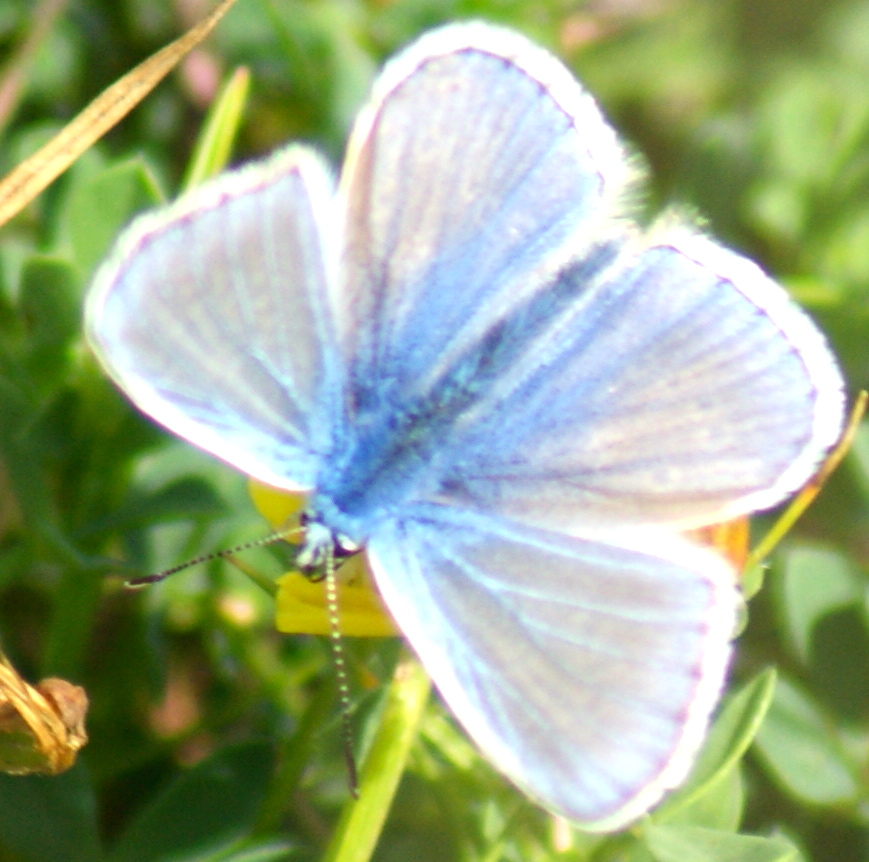 |
| Common Blue Butterfly at Pensthorpe |
 |
| One-year-old border in our Farmhouse Garden |

Perhaps it's time for another day out.
* http://holkhamwalledgarden.blogspot.co.uk/2013/05/the-arena-of-plants-arena-of-plants.html?utm_source=BP_recent
http://www.pensthorpe.com
http://www.e-ruston-oldvicaragegardens.co.uk
Sunday, 11 August 2013
Border Beetroot, Anne Boleyn and a Clouded Yellow
If variety is the spice of life, then this has been a vindaloo week. Despite spending too much time jostling in the underground with not even a cut flower for company (if I had my way, nosegays and buttonholes would be compulsory for commuters), I managed to escape into the great outdoors for two wonderful, inspiring days.

My first fresh air was at Blickling Hall in Norfolk. The former home of the Boleyn family (Anne is said to have been born there) is one of my favourite places to walk and after an enjoyable afternoon exercising my legs and jaw with friends, I withdrew to the gardens to commune with the borders.

The hotter end of the double borders was looking particularly exuberant. I was reminded of your comments following a recent post on creative vegetable growing* so I thought I would share this photo showing ruby chard and beetroot ‘Blood Red’ making a valuable, yet cost-effective contribution to the planting scheme.

The other big discovery I made in the double borders was that time is no great healer where plants are concerned. I have always loved Monarda, but after years of sorry plants with powdery mildew, I took the difficult decision to try to live without this beauty in our new garden. Then Monarda ‘Gardenview Scarlet’ caught my eye and guess which plant has been catapulted to the top of my must-have list? 'Gardenview Scarlet' has better resistance to powdery mildew than most cultivars, so I am hoping for a happily-ever-after ending to my Monarda love story.

Midweek, I found myself sharing shed space with representatives from nurseries and some of the most well-known gardens in the U.K. for a trade show focussing on sustainable ornamentals production; a subject close to my heart. We gathered at Howard, an excellent wholesale perennials nursery, where we were treated to enjoyable and enlightening presentations, followed by a tractor/trailer ride around the field grown areas of the nursery.


It was a day to consider issues of an important and serious nature, but maintaining an air of professionalism and composure is a challenge when you are bouncing merrily along on the back of a tractor through thousands of glorious perennials. The sight of a Clouded Yellow butterfly did little to quash my excitement.
 |
| Clouded Yellow butterfly |
After a fascinating and entertaining presentation by Fergus Garrett on sustainability at Great Dixter, we turned our attention to sustainable growing media. This is a hot topic for me, as I choose not to buy compost containing peat. Using peat in the garden is inappropriate on so many levels: loss of habitat; CO2 emissions; and, as a friend pointed out recently, it is wrong to use something which has taken thousands of years to form, to grow an annual which will be dead in a matter of weeks.
 |
| Scabious proving its credentials as a Peacock butterfly magnet at the nursery. |
You may be surprised to learn that there are no plans in the U.K. to ban, or even place a tax on using peat; and while there are targets regarding reducing the use of peat in horticulture, these are targets - not legislation. Away from the trade, I wonder if gardeners really care about peat. Do people buy the cheapest compost irrespective of ingredients? Perhaps some gardeners are still smarting after having tried one of the earlier, less successful peat-free alternatives. I hope not. Peat-free compost has moved on; it's time we all did.
http://www.howardnurseries.co.uk/latest-news/detail/49/
http://www.nationaltrust.org.uk/blickling-estate/
http://www.nationaltrust.org.uk/blickling-estate/
Tuesday, 30 July 2013
Welcoming Wildlife
Isn't it great when a plan starts to come together? When I began our garden last year, my main aim was to encourage wildlife by selecting plants which would offer a source of food and shelter. One year on, we are seeing a marked increase in the numbers of bees, butterflies and birds. Perhaps this is because of the weather and nothing to do with gardening, but when I go outside and find myself in a flurry of butterflies and I see them settling on plants which were selected to meet their needs, I feel certain that I have made sound choices.

The farmhouse garden is still far from mature - a budget blown on rabbit fencing put paid to any hope of planting big specimens - but it is beginning to do its job and we have a lively garden where we can enjoy a privileged, close view of the creatures visiting the plants.
I feel very strongly that our decisions make a difference and while we can’t encourage wildlife in if it isn’t within sensory distance, we can welcome visiting creatures with a delicious feast, somewhere to stay and a supportive environment for any offspring.

I garden organically; I have never gardened in any other way. If you should ever visit our garden, you will receive no apology for lawn weeds because we rejoice when we see bees enjoying flowering clover in our lawn and we tread very, very carefully!
 |
| Echinops ritro |
Gardening for wildlife might be my main aim, but I am selfish enough to design our garden for my requirements too. I have posted before about my need for readable structure in the garden* and although I select plants for other creatures, I want to see them arranged in a way which pleases my eye. Happily, bees and butterflies enjoy plants en masse as much as I do.
 |
| Cirsium rivulare 'Atropurpureum' |
 |
| Hyssopus officinalis |
 |
| Knautia macedonica |
My next challenge is to try to ensure food and shelter for wildlife all year round and I hope you will forgive me if I return each month to this subject which is so important to me. I am fascinated to hear about any plants you have found to be particularly attractive to beneficial insects and other wildlife. Meanwhile, I will grab myself a coffee and take a few minutes to enjoy the company of today's garden guests.
* The structure rant can be found at:
Subscribe to:
Posts (Atom)